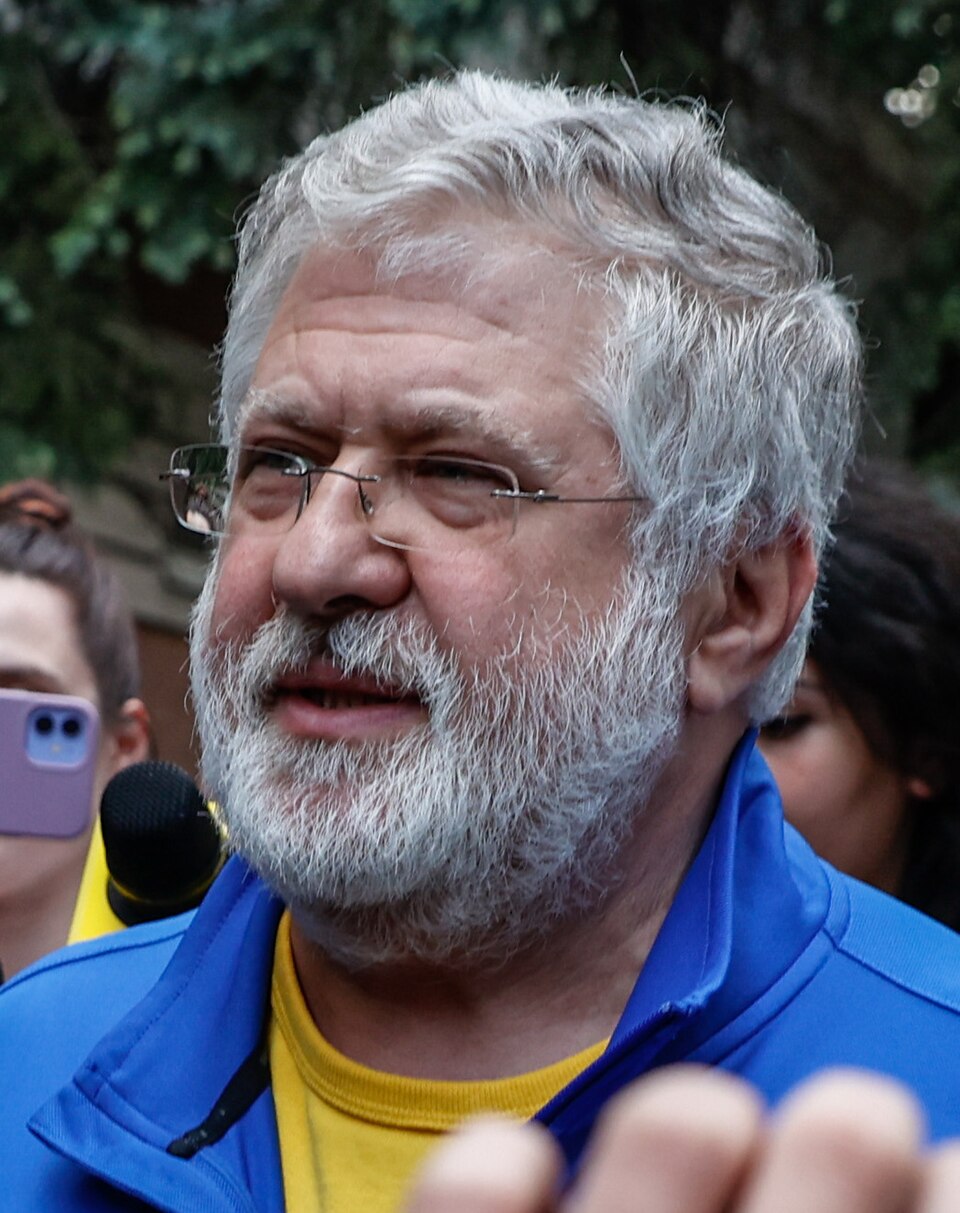
Who is Ihor Kolomoyskyy? Unpacking Ukraine's Billionaire, PrivatBank, and Political Influence
Ihor Kolomoyskyy stands as one of the most enigmatic and influential figures in modern Ukrainian history, a billionaire whose journey intertwines deeply with the nation's post-Soviet economic landscape and turbulent political shifts. From co-founding one of the country's largest banks to navigating high-stakes political skirmishes and facing international sanctions, Kolomoyskyy's story is a compelling case study of wealth, power, and the complex challenges of governance in a developing democracy. Understanding his trajectory provides crucial insights into the forces that have shaped contemporary Ukraine.
The Making of an Oligarch: Early Days and the Rise of PrivatBank
Ihor Kolomoyskyy's path to immense wealth began in the chaotic but opportunity-rich environment of early 1990s Ukraine, a period marked by the collapse of the Soviet Union and the emergence of a new capitalist system. It was during this transformative era that Kolomoyskyy, alongside his long-term business partner Henadiy Boholyubov, co-founded PrivatBank. Established in 1992 in Dnipro (then Dnipropetrovsk), the bank rapidly ascended to become a financial behemoth, a testament to their entrepreneurial acumen and ability to navigate the nascent market.
PrivatBank's growth was nothing short of meteoric. It quickly distinguished itself by embracing modern banking practices and expanding its reach across Ukraine, eventually becoming the dominant force in the country's financial sector. At its peak, PrivatBank handled an astonishing more than a third of all private deposits and served approximately half of Ukraine's population, making it an indispensable pillar of the national economy. This vast financial network not only cemented Kolomoyskyy's position as a key economic player but also provided a foundation for significant political leverage.
While the exact fluctuations of
ihor kolomoyskyy net worth have been subject to various estimations over the years, Forbes' 2023 data, as of April 4th, places his personal fortune at an estimated
$1 billion. This impressive sum reflects decades of strategic investments and an expansive business empire that stretched beyond banking into metallurgy, ferroalloys, oil, media, and aviation. For a deeper dive into his financial standing and global position, you can explore
Ihor Kolomoyskyy's $1 Billion Net Worth & Global Ranking. The rapid accumulation of wealth during this period, common among many post-Soviet oligarchs, often involved acquiring state assets at preferential prices and consolidating control over strategic industries, laying the groundwork for future controversies.
A Billionaire's Influence: Politics, Power, and the Dnipro Governorship
Kolomoyskyy's influence was never confined solely to the boardroom. Like many Ukrainian oligarchs, he understood that economic power translated into political clout, and vice versa. His most direct foray into state politics came in March 2014, a critical juncture for Ukraine. Following Russia's annexation of Crimea and the escalation of conflict in eastern Ukraine, Kolomoyskyy was appointed governor of his native Dnipro region (Dnipropetrovsk Oblast).
During his year-long tenure, Kolomoyskyy demonstrated a unique blend of patriotism and pragmatic leadership. He utilized his immense personal wealth and organizational skills to bolster the region's defense, funding and equipping volunteer battalions that played a crucial role in preventing the spread of Russian-backed separatism further into central Ukraine. This period solidified his image as a fierce defender of Ukrainian sovereignty for many, earning him considerable public support.
However, his powerful position and independent actions inevitably led to friction with the central government, particularly with then-President Petro Poroshenko. The clash was largely seen as a power struggle over control of state-owned enterprises and political influence, culminating in Poroshenko firing Kolomoyskyy in March 2015. This episode underscored the inherent tension between oligarchic power and nascent state institutions in Ukraine.
The repercussions of his political actions continued to reverberate years later. In March 2021, the U.S. State Department sanctioned Kolomoyskyy, citing his involvement in significant corruption during his time as governor of the Dnipro region. This move highlighted international concerns about governance and rule of law in Ukraine, even as the country sought closer ties with the West. The sanctions effectively barred Kolomoyskyy and his immediate family from entering the United States, a significant blow to his international standing.
The PrivatBank Saga: Nationalization, Fraud Allegations, and Global Legal Battles
Perhaps the most significant and controversial chapter in Ihor Kolomoyskyy's career is the nationalization of PrivatBank. In December 2016, the Ukrainian government took the unprecedented step of nationalizing the bank, citing systemic risk to the country's financial stability. An extensive investigation had revealed alleged large-scale fraud perpetrated over a period of ten years, leading to a massive capital deficit – a "hole" – in the bank's balance sheet, estimated to be over $5.5 billion.
The government's claim was that Kolomoyskyy and Boholyubov had engaged in related-party lending, effectively siphoning funds out of the bank through dubious loans to companies they controlled. The nationalization was presented as a necessary measure to prevent a collapse that would have devastated the Ukrainian economy. The state had to inject billions of dollars to recapitalize the bank, placing a significant burden on Ukrainian taxpayers.
This move ignited a protracted and complex series of legal battles across multiple jurisdictions. In December 2017, the High Court of London ordered a worldwide freeze on assets worth approximately $2.5 billion belonging to Kolomoyskyy and Boholyubov. This was part of PrivatBank's efforts to recover funds it claimed were misappropriated. The legal skirmishes have since spanned courts in Ukraine, the UK, the US, and elsewhere, becoming a defining struggle for accountability and rule of law in Ukraine. The ongoing nature of these disputes means that the ultimate financial impact on Kolomoyskyy's wealth and assets remains fluid. For more on the legal controversies surrounding his finances, refer to
The Controversial Billion: Ihor Kolomoyskyy's Assets & Sanctions.
Understanding the implications: The PrivatBank nationalization saga is more than just a financial dispute; it's a litmus test for Ukraine's commitment to fighting corruption and establishing a robust rule of law. The success or failure of these legal efforts has significant implications for investor confidence and Ukraine's path towards European integration. It highlights the challenges faced by nations trying to reform entrenched oligarchic systems.
Shifting Alliances and Stripped Citizenship: Kolomoyskyy and Zelensky
Ihor Kolomoyskyy's relationship with Volodymyr Zelensky adds another fascinating layer to his complex political narrative. Before Zelensky's presidential run, his popular TV show "Servant of the People," which satirically depicted a schoolteacher becoming president, aired on Kolomoyskyy's 1+1 TV network. This media platform provided immense exposure for Zelensky, leading to widespread speculation about Kolomoyskyy's backing and potential influence over the future president.
Indeed, during Zelensky's early presidency, many observers believed Kolomoyskyy exerted significant sway from behind the scenes. However, as Zelensky's administration matured and the country moved towards a more definitive stance against oligarchic power, the relationship reportedly soured. Zelensky's "de-oligarchization" law, aimed at curbing the political and economic influence of powerful businessmen, signaled a clear intention to reduce the unchecked power that figures like Kolomoyskyy had long wielded.
A dramatic turning point occurred in July 2022, when reports emerged that Kolomoyskyy had his Ukrainian citizenship stripped by presidential decree. While officially not confirmed by Zelensky's office, leaks suggested the revocation was based on his alleged possession of multiple citizenships (Ukrainian law generally prohibits dual citizenship). This move was seen as a bold statement against one of Ukraine's most powerful figures, effectively distancing the state from his influence and underscoring the government's commitment to challenging entrenched interests. This development further complicates the assessment of
ihor kolomoyskyy net worth, as his ability to operate within Ukraine is severely curtailed.
Conclusion
Ihor Kolomoyskyy's story is a compelling microcosm of post-Soviet Ukraine – a narrative woven with threads of audacious entrepreneurship, vast wealth accumulation, deep political entanglement, and ultimately, a collision with evolving national and international standards of governance and transparency. From his pivotal role in establishing PrivatBank to his controversial governorship during a national crisis, and the ongoing legal battles that have followed the bank's nationalization, Kolomoyskyy has profoundly impacted Ukraine's economic and political landscape. His reported stripped citizenship and international sanctions mark a significant shift, signaling Ukraine's determination to move beyond the era of unchecked oligarchic power. As Ukraine continues its journey toward reform and European integration, the legacy of figures like Ihor Kolomoyskyy will undoubtedly remain a subject of intense scrutiny and historical debate.